Wine Tasting With a Sugar Daddy: Mastering Tasting Etiquette
Reading time: 9 minutes
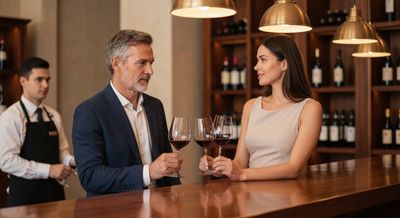
When your sugar daddy invites you to a wine tasting at the renowned Château Smith Haut Lafitte, it's clear: this is no ordinary dinner. Professional wine tastings are a natural part of the world of established gentlemen. The right wine tasting etiquette decides whether you're seen as a cultured companion or come across as unsure. According to a 2022 study by the Wine & Spirit Education Trust (WSET), 73 percent of participants feel social insecurity at upscale tastings when they don't know the tasting rules.
Why wine tasting etiquette matters in an arrangement
In upscale sugar dating circles, wine tastings are more than a leisure activity. They signal status, education and taste. When you master tasting culture, you show your sugar daddy: I move confidently in his world. That strengthens your position in the arrangement and opens doors to more exclusive events.
According to the International Wine Challenge 2023, more than 12,000 professional wine tastings take place every year in Europe alone. Many of them are in circles of successful entrepreneurs. The right etiquette opens up networks and creates conversation starters that go far beyond the tasting itself. Just as with polished table manners, the same applies here: knowledge creates confidence.
Preparing for a professional wine tasting
Before you show up with your sugar daddy for a tasting at the Markus Molitor winery on the Moselle in Germany or at the Urban Tasting Room in Berlin, you should prepare. Research the winery or the organizer in advance. Many sommeliers expect basic knowledge of grape varieties and growing regions.
Three basic terms of sommelier language
Professional tasting uses precise technical language. You should know these terms and use them with confidence:
- Terroir: The sum of all natural factors (soil, climate, location) that shape the character of a wine. Example: the terroir of the Rheingau produces mineral Riesling notes.
- Tannin: Compounds from grape skins and seeds that give red wines their structure. They create the slightly furry mouthfeel. A Bordeaux from Château Margaux shows elegant, ripe tannins.
- Finish: Describes the length and quality of the aftertaste. A Grand Cru from Burgundy can have a finish of 30 seconds or longer.
- Bouquet: The sum of all aroma impressions on the nose. It differs from the primary fruit aroma through notes of maturity such as leather, tobacco or spices.
According to the German Wine Institute (Deutsches Weininstitut, 2023 statistics), only 18 percent of casual tasters use these terms correctly. Using them precisely sets you apart immediately.
The five steps of professional wine tasting etiquette
Step 1: The visual check
Hold the glass by the stem against a white background or a candle. Tilt it slightly and look at the color and clarity. A young Bordeaux shows an intense purple-red, an aged Burgundy more of a brick red. Comment briefly on what you observe: "Beautiful ruby red with an amber rim – suggests maturity."
Avoid touching the glass by the bowl. It leaves fingerprints and warms the wine. At a tasting at Domus Vini in Würzburg in 2023, I noticed: professionals always hold the glass by the stem or the base.
Step 2: Swirling and smelling
Swirl the glass gently in circles to release the aromas. Put your nose deep into the glass and breathe in deliberately. Identify primary aromas (fruit), secondary ones (yeast notes from fermentation) and tertiary ones (aging notes from the barrel).
Sommeliers recommend three short breaths instead of one long one. This spares your smell receptors and allows more nuanced perception. The Wine Scholar Guild confirms this technique as standard in its 2023 curriculum.
Step 3: Tasting properly
Take a small sip and spread it around your whole mouth. Draw a little air in through your lips – "slurping" is absolutely normal and welcome at professional tastings. It oxidizes the wine and intensifies the aromas.
Keep the wine in your mouth for about five to seven seconds. Concentrate on different levels of taste: sweetness at the tip of the tongue, acidity at the sides, bitterness at the back. At a tasting with many courses, spit into the spittoon provided – this is not a sign of disrespect but professional behavior.
Step 4: Taking notes
At upscale tastings you usually receive a tasting sheet. Write down your impressions of color, nose, palate and finish. Avoid generic words like "yummy" or "good". Use instead: "intense cassis fruit", "lively acidity", "silky tannin".
The Robert Weil winery in Kiedrich provides structured scoring sheets at its premium tastings. These follow the international WSET scheme with point scales from 1 to 5 for intensity, complexity and length.
Step 5: Making conversation
Share your impressions with the sommelier and your sugar daddy, but don't dominate. Ask open questions: "What terroir shapes this wine?" or "How long did this vintage age in the barrique?" This shows interest and invites dialogue.
Never contradict your sugar daddy directly if he expresses a different opinion. Say instead: "Interesting, I'm also picking up a slight vanilla note." This technique works wonderfully at art auctions and gallery visits too.
Tasting rules for different tasting formats
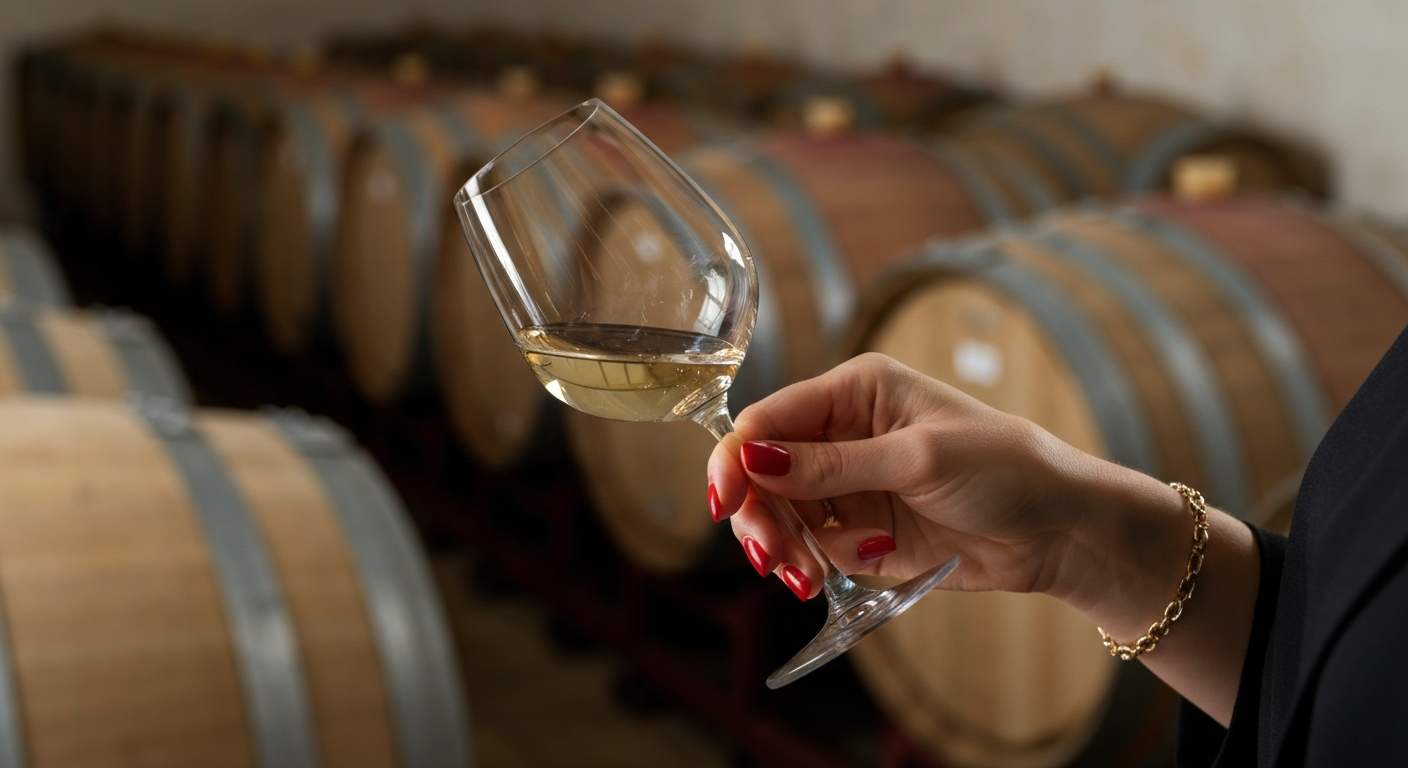
Wine tastings differ greatly depending on the occasion and the organizer. At a vertical tasting at Château d'Yquem you taste different vintages of one wine. At a horizontal tasting you compare the same vintage from different producers.
The blind tasting is especially demanding: you taste without knowing the origin or vintage. Here only your sensory skill counts. A 2021 study from the University of California, Davis shows that even experienced tasters correctly identify the origin of only 40 percent of wines in blind tastings.
The right clothing for a wine tasting
Business casual is the safe standard. Avoid strong perfumes – they overpower the wine aromas and disturb other participants. At a tasting at Schloss Johannisberg in 2024, the sommelier discreetly asked a participant wearing an intense fragrance to tone it down.
Don't wear flashy bracelets or rings that clink when you swirl the glass. Dark clothing is practical in case a drop does go astray. The right preparation resembles that for upscale dinners – here too, polished restraint instead of flashy showmanship is what counts.
Wine arrangement: when wine becomes a gift
Some sugar daddies give their sugar baby exclusive bottles after successful tastings. A Château Pétrus 2010 vintage costs around $3,500, and a Romanée-Conti Grand Cru can exceed $16,000. Gifts like these signal not only generosity but also the wish to deepen shared experiences.
Store such wines properly. Lying down, at 54 to 57 degrees Fahrenheit (12 to 14 degrees Celsius), constant humidity of around 70 percent and without exposure to light. A wine cooler like the EuroCave Premiere costs from about $900 and is a sensible investment if your arrangement regularly includes high-quality wines.
Avoiding common mistakes in tasting culture
Even experienced tasters make mistakes. Avoid these typical faux pas:
Never fill the glass to the top. A wine glass is filled to one third at most, so there is enough room for the aromas. Avoid eating during the tasting, unless bread or neutral crackers are explicitly offered. Cheese or chocolate significantly distort taste perception.
Don't comment loudly on every wine. Quality shows in precise, thoughtful remarks, not in quantity. At a tasting at the Van Volxem winery on the Saar in 2023, I observed that the most competent participants spoke the least, but most precisely.
Never ask for the price of a wine while other participants are present. It is considered uncouth. If you're curious about the value, ask your sugar daddy discreetly afterwards or look it up online later on platforms like wine-searcher.com.
After the tasting: the right follow-up
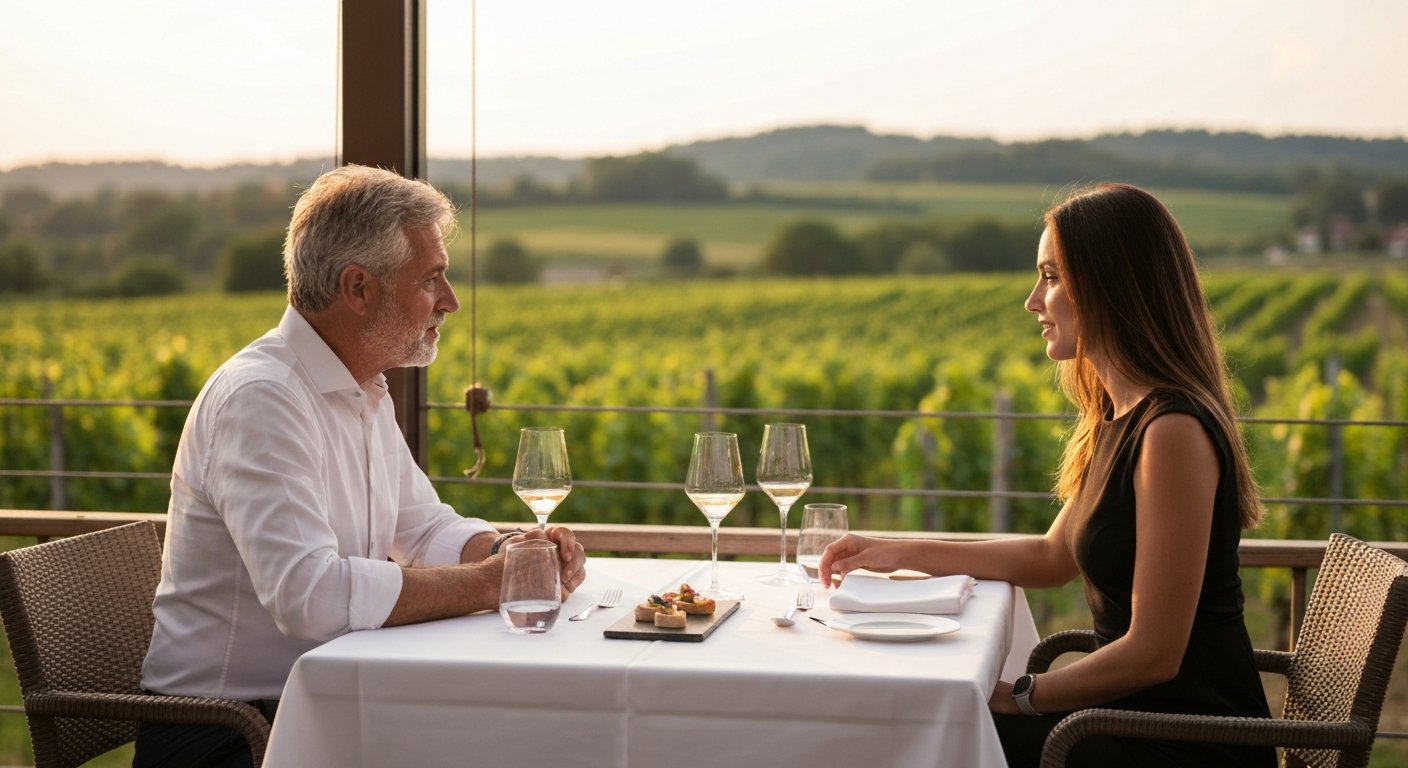
Thank the organizer or sommelier in person. Mention one specific wine that impressed you: "The 2015 Riesling Kabinett had a remarkable balance between sweetness and acidity." Details like that stay in people's memory.
With your sugar daddy you can look back on the experience. Ask about his favorites and share your impressions. This creates connection and shows genuine interest in his passion. Perhaps it will lead to further shared activities or even trips to renowned wineries.
Continuing education in wine tasting etiquette
If you want to deepen your knowledge, certified courses are a good option. The Wine & Spirit Education Trust (WSET) offers courses from Level 1 to Level 4. A WSET Level 2 course costs roughly $400 to $500 and provides solid foundational knowledge of grape varieties, regions and tasting technique. You take the exam after a two-day seminar.
In Germany, institutions such as the Deutsche Wein- und Sommelierschule in Koblenz or the Weinakademie in Munich offer courses like these. According to WSET, over 95,000 candidates worldwide completed its programs in 2022 – a sign of the growing importance of professional wine knowledge.
Alternatively, you can use apps like Vivino or Delectable. They help you document wines, leave ratings and build your tasting portfolio. This sharpens your perception and gives you confidence at future tastings.
Frequently asked questions about wine tasting etiquette
How should I behave if I don't like a wine?
Be diplomatic. Don't say "I don't like this", say "This style is less my thing" or "I prefer fruitier profiles". That respects the winemaker's work and shows discernment. At professional tastings criticism is allowed, but it should be phrased constructively.
May I decline to drink at an upscale wine tasting?
Absolutely. Use the spittoon consistently or deliberately drink only small amounts. "I want to focus on the aromas" is an elegant reason. Nobody expects you to drink all of the 15 wines at a tasting completely. Professionals always spit in order to preserve their perception.
What do I do if I don't understand the sommelier's language?
Ask. A competent sommelier is happy to explain technical terms. Say: "Could you explain what you mean by 'reductive winemaking'?" This shows a willingness to learn and is received positively. Avoid using terms whose meaning you don't know – experienced tasters notice that immediately.
How do I prepare for a blind tasting?
Train your sensory perception systematically. Taste different grape varieties and regions regularly. Create an aroma profile for classic wines: Sauvignon Blanc (gooseberry, grass), Chardonnay (butter, vanilla when barrique-aged), Cabernet Sauvignon (cassis, cedar wood). Over time you build up a reference memory.
Which mistakes are not forgiven at a first wine tasting?
Strong perfume is the most common and most serious mistake – it bothers everyone present. Loud, unqualified commenting or condescending remarks about wines also stand out negatively. Hold back, observe and learn at your first tastings. Modesty combined with genuine interest is always appreciated.
Conclusion: wine tasting etiquette as an investment in your arrangement
The right wine tasting etiquette is far more than a set of manners. It is your key to a world in which your sugar daddy feels at home. When you master the tasting rules, understand sommelier language and move confidently in tasting culture, you lastingly strengthen your position in the arrangement. You're perceived not just as an attractive companion but as a competent partner on equal footing.
Invest time in your continuing education. Attend tastings, complete a WSET course and gather practical experience. The combination of theoretical knowledge and confident application makes the difference between mediocrity and excellence. Your next tasting with your sugar daddy will be not only an enjoyable experience but also proof of your cultural competence.